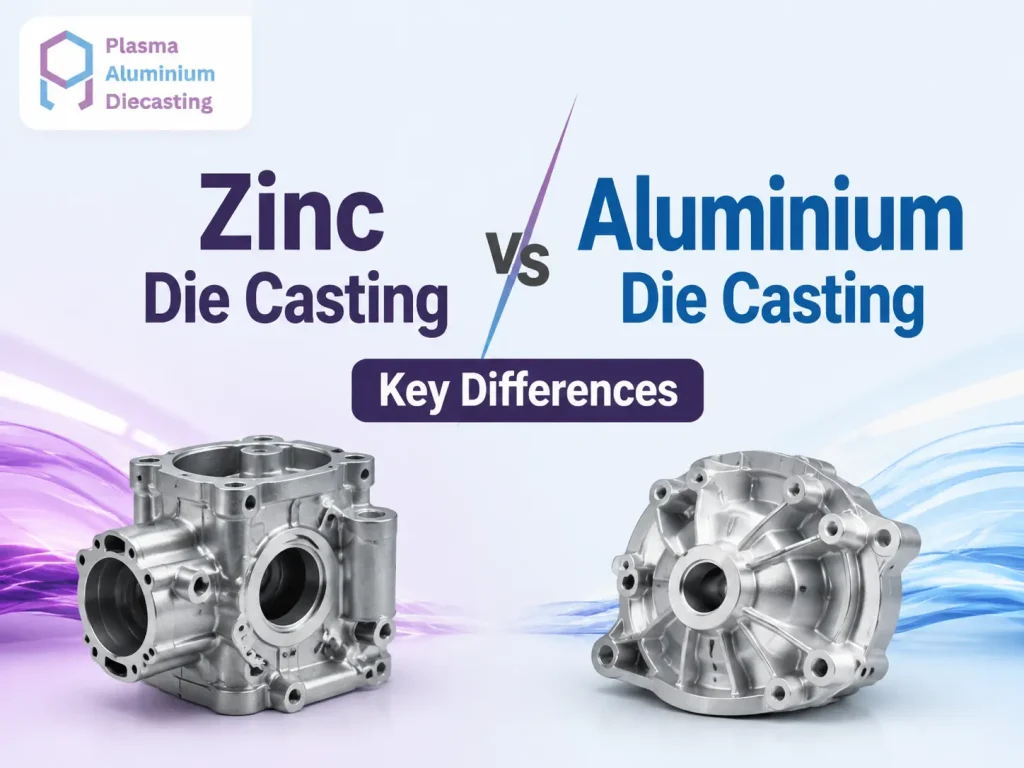
Zinc die casting vs aluminium die casting is one of the most common questions engineers and product designers run into when choosing a metal for their next component. Both processes produce precise, high-volume metal parts, but the two metals behave very differently once they enter production, and picking the wrong one can cost you in weight, strength, or budget down the line.
This guide breaks down how zinc and aluminium compare across strength, cost, weight, and application, so you can make a confident decision for your specific project.
Zinc Die Casting vs Aluminium Die Casting: A Quick Overview
Before getting into the technical details, it helps to understand the core distinction. Aluminium is lighter and better suited to structural, load-bearing applications, while zinc offers higher strength in smaller, more intricate parts and casts with tighter tolerances at lower temperatures. Neither metal is universally better. The right choice depends entirely on what the part needs to do.
What Is Zinc Die Casting?
Zinc die casting is a manufacturing process where molten zinc alloy gets injected into a steel mould under high pressure, similar in principle to aluminium die casting but using a metal with a much lower melting point, typically around 380 to 420 degrees Celsius. This lower melting point means less wear on the die, which allows for longer tool life and tighter dimensional control.
Zinc alloys, most commonly Zamak grades, offer excellent fluidity, which lets manufacturers cast very thin walls and fine detail without the metal cooling too quickly to fill the mould properly.
What Is Aluminium Die Casting?
Aluminium die casting follows the same basic process but uses aluminium alloy, which melts at a much higher temperature, typically between 650 and 750 degrees Celsius. This higher casting temperature means more wear on tooling over time, but it produces parts that are significantly lighter and often stronger relative to their weight than zinc equivalents.
Aluminium’s natural corrosion resistance and lower density make it the default choice for automotive, aerospace, and any application where weight reduction directly affects performance.
Zinc Die Casting vs Aluminium Die Casting: Key Property Differences
Strength and Durability
Zinc alloys generally offer higher tensile strength and impact resistance than aluminium in absolute terms, which makes zinc a strong choice for small parts that need to survive repeated stress, like gears, hinges, and connectors. Aluminium, while slightly weaker per unit of material, delivers a better strength-to-weight ratio, which matters more in applications where reducing overall mass is the priority. The North American Die Casting Association publishes detailed material property data comparing zinc and aluminium alloys, which is a useful reference when evaluating specific grades for a project.
Weight
This is where the comparison becomes straightforward. Aluminium weighs roughly a third of zinc for the same volume. Any application where weight genuinely matters, vehicles, drones, portable electronics, tends to favour aluminium almost automatically.
Melting Point and Casting Temperature
Zinc’s lower melting point translates directly into longer die life and faster cycle times, since the mould does not endure the same thermal stress that aluminium casting puts it through. This often makes zinc more economical for very high-volume runs of small parts.
Corrosion Resistance
Aluminium forms a natural oxide layer that protects it from corrosion without additional coating in many environments. Zinc also resists corrosion reasonably well but typically needs plating or coating for long-term outdoor or humid exposure, adding a finishing step that aluminium often skips.
Dimensional Accuracy
Zinc die casting generally holds tighter tolerances than aluminium, thanks to its lower shrinkage rate during cooling. For small, precision components where every fraction of a millimetre matters, zinc frequently has the edge.
Cost
Raw material cost for zinc typically runs higher per kilogram than aluminium, but zinc’s longer tool life and faster cycle times can offset this over a long production run. Aluminium tends to win on cost for larger parts, simply because you need less zinc-equivalent mass to achieve the same structural function.
Quick Comparison Box Zinc die casting: higher strength, tighter tolerances, longer tool life, heavier, needs coating for corrosion resistance. Aluminium die casting: lighter, naturally corrosion resistant, better strength-to-weight ratio, shorter tool life, better suited to larger or structural parts.
If you want a deeper look at how alloy grade affects performance within aluminium die casting specifically, this guide on the best aluminium alloy for die casting in India breaks down the differences between A380, A383, A360, and A413.
Zinc Die Casting vs Aluminium Die Casting: Which Process Suits Which Application?
When to Choose Zinc
Zinc die casting works best for small, intricate parts that need high strength and tight tolerances without carrying much weight. Connectors, gears, decorative hardware, and small housings in consumer electronics commonly use zinc, since its fine detail capability and durability outweigh the added weight in applications where size stays small.
When to Choose Aluminium
Aluminium die casting wins whenever weight reduction matters, or when the part needs to withstand outdoor exposure without heavy coating requirements. Automotive components, EV battery enclosures, motor housings, and larger structural brackets almost always favour aluminium over zinc for exactly these reasons.
Casting Methods Used for Each Metal
High Pressure Die Casting for Aluminium and Zinc
Both metals commonly use high pressure die casting for high-volume production, though the process parameters differ significantly due to the temperature and fluidity differences between them. You can read more about how this method works specifically for aluminium through the high pressure die casting process page.
Gravity Die Casting
Gravity die casting suits both metals for lower-volume runs or parts needing denser, more uniform grain structure, though manufacturers use it more commonly for aluminium components that need higher structural integrity. You can find details on this method on the gravity die casting page.
Surface Finish and Post-Processing Differences
Surface finish is another area where zinc die casting vs aluminium die casting shows meaningful differences. Zinc’s excellent fluidity allows it to capture fine surface detail directly from the mould, which often means less post-processing work for decorative or highly detailed parts. This is one reason zinc remains popular for hardware fittings, badges, and small consumer product components where appearance matters as much as function.
Aluminium parts, especially those cast through high pressure die casting, generally need more finishing work to achieve a comparable surface quality, though this gap narrows significantly with proper die maintenance and process control. Aluminium also takes anodising exceptionally well, which gives designers a wide range of colour and texture options that zinc cannot easily match without additional plating.
Environmental and Recycling Considerations
Both metals recycle well, but the environmental profile of zinc die casting vs aluminium die casting differs in a few practical ways. Aluminium production from recycled scrap uses significantly less energy than primary aluminium smelting, which has made recycled aluminium a common and cost-effective input for die casting operations.
Zinc also recycles efficiently, and scrap generated during the casting process typically gets remelted with minimal quality loss. For manufacturers under pressure to reduce their environmental footprint, both metals offer a genuine sustainability advantage over materials that are harder to recycle, though aluminium’s lower overall weight also means less material and transport energy across a product’s lifecycle.
Common Mistakes When Choosing Between Zinc and Aluminium
Many buyers weigh zinc die casting vs aluminium die casting based purely on unit cost without accounting for weight, finishing requirements, or tool life across the full production run. A zinc part might look cheaper on paper, but if the application needs corrosion resistance, the added plating step can eat into that savings quickly.
Another common mistake is defaulting to whichever metal a supplier already stocks rather than evaluating what the part actually needs. This shortcut often leads to over-engineered parts that weigh more than necessary or under-engineered parts that fail sooner than expected under repeated stress.
Ignoring the interaction between metal choice and die design also causes problems. Zinc and aluminium behave differently as they cool, and a die designed around one metal’s shrinkage rate will not automatically work well for the other without adjustment. Manufacturers who treat zinc die casting vs aluminium die casting as interchangeable at the tooling stage often end up with dimensional inconsistencies that only show up after production has already started.
How to Decide: Zinc Die Casting vs Aluminium Die Casting for Your Project
Start by asking what matters most for your specific part. If weight reduction and corrosion resistance top the list, aluminium is usually the better fit. If you need small, highly detailed parts with excellent strength and tight tolerances, and weight is not a major concern, zinc often makes more sense.
Production volume matters too. Very high-volume runs of small parts sometimes favour zinc because of its longer tool life, while larger, structural, or weight-sensitive components almost always point toward aluminium regardless of volume.
Working with a manufacturer who understands both processes helps avoid guesswork. You can explore the range of aluminium die casting services available to see how alloy and process selection get matched to different applications, or get in touch directly to discuss your specific part requirements and production volume.
Conclusion
Zinc die casting vs aluminium die casting is not a question with one universal answer. Zinc offers strength, precision, and longer tool life for small, intricate parts, while aluminium delivers lighter weight, natural corrosion resistance, and better performance in larger, structural, or weight-sensitive applications. Understanding these trade-offs before committing to tooling saves both money and rework later in the production process.
For most automotive, industrial, and structural applications, aluminium remains the stronger overall choice, but zinc still holds a clear advantage for small, detailed components where its unique properties genuinely fit the job. The right decision ultimately comes down to matching the metal’s strengths to what your specific part demands, rather than defaulting to whatever feels cheaper or more familiar at first glance. You can explore the full range of capabilities on the Plasma Aluminium Die Casting homepage to see which process suits your next project.
Frequently Asked Questions
Is zinc die casting stronger than aluminium die casting?
Zinc generally offers higher tensile strength in absolute terms, but aluminium delivers a better strength-to-weight ratio, which matters more for applications where reducing overall mass is a priority.
Which is cheaper, zinc die casting or aluminium die casting?
It depends on the part. Zinc’s raw material cost per kilogram runs higher, but its longer tool life can offset this over long production runs, while aluminium tends to cost less for larger parts due to lower material mass needed.
Does zinc die casting need extra corrosion protection compared to aluminium?
Yes, in most cases. Aluminium forms a natural protective oxide layer, while zinc typically needs plating or coating for long-term outdoor or humid exposure.
Which process holds tighter tolerances, zinc or aluminium die casting?
Zinc generally holds tighter tolerances due to its lower shrinkage rate during cooling, making it a strong choice for small, precision components.
Can the same die be used for both zinc and aluminium die casting?
Not typically. The two metals shrink and cool differently, so dies need to be designed around the specific metal’s properties rather than shared between them without modification.

Prasanna Kumar Tiwari
Plasma Aluminium Diecasting was established after analyzing the worldwide surge in manufacturing demand across diverse sectors — from automobiles to FMCG, Oil & Gas, and Pharma. To meet this growing need, we provide a comprehensive range of precision-engineered products and industrial solutions that streamline production and enhance efficiency. As a Leading Aluminium Die Casting Manufacturer in Pune, our commitment lies in delivering innovative, technology-driven, and cost-effective solutions tailored for modern industries.