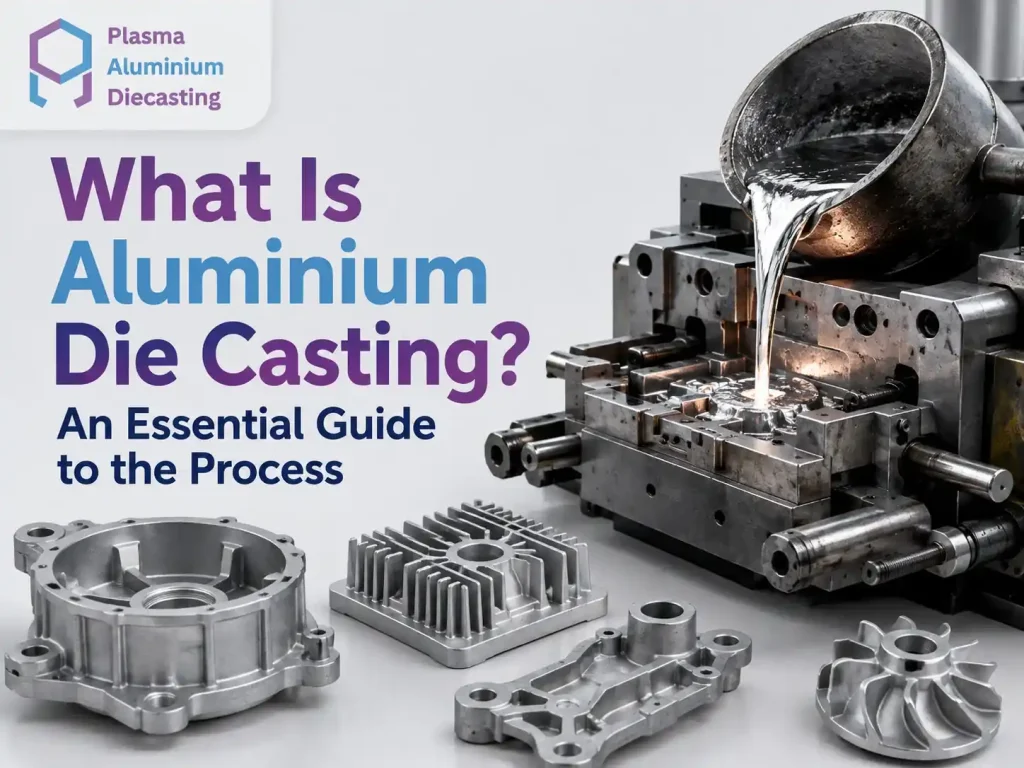
If you have ever picked up a car engine bracket, a laptop casing, or a pump housing and wondered how it got its exact shape, there is a good chance aluminium die casting made it possible. This manufacturing process shapes molten metal into precise, repeatable parts, and it sits behind a huge share of the metal components used in everyday products.
This guide answers what is aluminium die casting, walks through how the process actually works, and covers where it gets used across different industries.
Stay updated with aluminium manufacturing insights.
What Is Aluminium Die Casting, Exactly?
Aluminium die casting is a manufacturing process where molten aluminium gets forced into a steel mould, known as a die, under high pressure. The metal fills the cavity, cools quickly, and takes on the exact shape of the mould. Once it hardens, the part gets ejected and finished with trimming or machining as needed. The North American Die Casting Association defines die casting as one of the most efficient methods for producing complex metal parts at scale, and the same principles apply globally, including across Indian manufacturing.
The process allows manufacturers to produce thousands of identical parts with tight dimensional accuracy, which is exactly why it dominates industries like automotive, electronics, and industrial equipment. Understanding what is aluminium die casting really comes down to understanding this basic loop: melt, inject, cool, eject, repeat.
How Does Aluminium Die Casting Work?
Melting and Alloy Preparation
The process starts with melting aluminium alloy in a furnace at temperatures typically between 650 and 750 degrees Celsius. Manufacturers select the alloy grade based on the part’s intended use, since different alloys behave differently once they enter the mould.
Injection Into the Die
Once molten, the aluminium gets injected into the die cavity under significant pressure. In high pressure die casting, this injection happens at speeds that can exceed 500 kilometres per hour, filling even thin, complex sections in a fraction of a second.
Cooling and Ejection
The metal cools and solidifies inside the die within seconds. Once solid, the die opens and ejector pins push the finished part out. This entire cycle, from injection to ejection, often takes less than a minute for smaller components.
Trimming and Finishing
Freshly cast parts usually have excess metal along the edges, known as flash, from where the mould halves meet. This gets trimmed off, and the part may go through additional machining, surface treatment, or coating depending on what the final application requires.
Types of Aluminium Die Casting
High Pressure Die Casting (HPDC)
This is the most common method used across the industry. It suits high-volume production and works well for complex shapes with thin walls, which makes it the default choice for automotive and electronics components.
Low Pressure Die Casting (LPDC)
Instead of high-speed injection, this method fills the mould more slowly using controlled air pressure from below. It produces denser castings with fewer internal defects, making it a better fit for pressure-critical parts like wheels or pump housings.
Gravity Die Casting
This method relies purely on gravity to fill the mould rather than external pressure. It is slower than HPDC but produces stronger, more consistent parts, which suits components that face higher structural loads.
If you are exploring which alloy pairs best with your chosen casting method, it helps to understand how alloy grade affects performance and cost. You can read a detailed breakdown in this guide on the best aluminium alloy for die casting in India, which covers how different grades suit different applications.
Why Manufacturers Choose Aluminium Die Casting
Aluminium die casting offers a combination of benefits that few other manufacturing processes match at scale. The parts come out lightweight yet strong, which matters enormously in industries like automotive and aerospace where every gram affects performance. The process also allows for complex geometries, integrated features like mounting points and cooling channels, and tight tolerances that would be difficult or expensive to achieve through machining alone.
Cost efficiency plays a big role too. Once the tooling is built, aluminium die casting can produce thousands of identical parts at a relatively low per-unit cost, which makes it attractive for high-volume manufacturing. Aluminium’s natural corrosion resistance and recyclability add further appeal, especially as manufacturers face growing pressure to reduce environmental impact.
Quick Fact Box A single die casting mould can produce anywhere from tens of thousands to over a million parts before it needs replacement, depending on the alloy used and the complexity of the part. This is a big reason aluminium die casting remains the backbone of high-volume manufacturing across automotive, electronics, and industrial sectors.
How Long Does the Aluminium Die Casting Process Take?
One of the reasons manufacturers keep coming back to this process is speed. A typical die casting cycle, from injection to ejection, can complete in as little as 15 to 60 seconds for smaller parts, though larger or more complex components take longer. This speed, combined with the precision the process delivers, is a big part of the answer when someone asks what is aluminium die casting and why it dominates high-volume metal manufacturing.
Cycle time depends on part size, wall thickness, and the alloy used. Thinner sections cool faster, which shortens the cycle, while thicker or more complex geometries need longer cooling to avoid internal stress or warping once the part comes out of the die. Manufacturers running high-volume production lines often optimise die design specifically to shave seconds off each cycle, since even small time savings add up significantly across thousands of parts.
Dimensional Accuracy and Tolerances in Aluminium Die Casting
Precision is one of the biggest reasons manufacturers rely on aluminium die casting instead of other metal forming methods. Well-controlled die casting processes routinely hold tolerances within a fraction of a millimetre, which matters enormously for parts that need to fit precisely into an assembly without additional machining.
This level of accuracy comes from a combination of factors: die quality, consistent injection pressure, controlled cooling rates, and proper alloy selection. A manufacturer that skips quality checks at any of these stages risks producing parts with dimensional drift, which shows up as fitment issues further down the assembly line. This is exactly why understanding what is aluminium die casting also means understanding the quality controls that sit behind a reliable production run.
How to Tell If a Part Is Aluminium Die Cast
If you are curious whether a specific component you are holding came from this process, there are a few tell-tale signs. Die cast parts often show a faint seam line, called a parting line, where the two halves of the mould met during casting. Small round marks from ejector pins sometimes appear on the back or underside of the part as well.
The surface finish also gives clues. Die cast aluminium typically has a smooth, slightly matte texture straight out of the mould, before any additional polishing or coating. If a part combines complex geometry, thin walls, and a metallic grey finish with these small surface marks, there is a good chance it started life through aluminium die casting.
Common Applications of Aluminium Die Casting
Aluminium die casting shows up in far more places than most people realise. In the automotive sector, it produces engine components, transmission housings, structural brackets, and increasingly, EV battery enclosures and motor housings. In electronics, it forms the casings and heat sinks that protect and cool devices ranging from routers to laptops.
Industrial machinery relies on die cast aluminium for pump housings, valve bodies, and gearbox components, since the process holds tight tolerances that mechanical assemblies depend on. Even everyday household items, from kitchen appliance parts to door hardware, often start as aluminium die cast components. The consumer goods sector also uses it extensively for items like torch bodies, camera housings, and decorative fittings, where a clean surface finish matters as much as structural strength.
What Is Aluminium Die Casting Used For in Everyday Products?
It is worth pausing here because this question comes up often. What is aluminium die casting used for beyond the factory floor? Look around your home or office and you will likely spot several examples: laptop and camera bodies, power tool housings, LED light fixtures, and even certain furniture hardware.
The reason it shows up so widely is simple. Aluminium die casting gives manufacturers a way to combine strength, light weight, and a clean finish in a single manufacturing step, without needing to assemble multiple smaller parts together.
Advantages and Limitations
Like any manufacturing process, aluminium die casting comes with trade-offs worth understanding before committing to it for a project.
On the advantage side, it delivers excellent dimensional accuracy, strong part-to-part consistency, and the ability to produce thin-walled, complex shapes that other processes struggle with. It also machines and finishes well, and the tooling, while expensive upfront, pays off quickly at high production volumes.
On the limitation side, the upfront tooling cost makes it a poor fit for very low production volumes or one-off prototypes. Certain internal defects, like porosity, can occur if the process is not tightly controlled, which is why working with an experienced manufacturer matters. Design changes after tooling is built also tend to be costly, so getting the part design right early saves significant time and money later.
Choosing the Right Aluminium Die Casting Partner
Understanding what is aluminium die casting is only the first step. Getting good parts out of the process depends heavily on the manufacturer you work with, from alloy selection and die design to quality control and finishing.
Look for a manufacturer with experience across the specific casting method your part needs, whether that is high pressure, low pressure, or gravity die casting, along with in-house testing capability to catch defects before they reach you. You can explore the range of aluminium die casting services available to see how these capabilities come together for different industries.
If you have a specific component in mind and want to discuss feasibility, tooling requirements, or production volume, it is worth getting in touch directly to walk through your project details with the team.
Conclusion
So, what is aluminium die casting in simple terms? It is a manufacturing process that turns molten aluminium into precise, repeatable parts by forcing it into a steel mould under pressure or gravity, then cooling and ejecting the finished component. The process powers a massive range of products across automotive, electronics, and industrial manufacturing, and its combination of speed, strength, and cost efficiency explains why it remains one of the most widely used metal forming methods today.
Whether you are designing a new component or trying to understand why a part in your hand looks the way it does, knowing how aluminium die casting works gives you a much clearer picture of modern manufacturing. For more on the industry, you can visit the Plasma Aluminium Die Casting homepage to explore the full range of capabilities and services.
Frequently Asked Questions
Manufacturers use it to produce precise metal components across automotive, electronics, industrial machinery, and household products, including engine parts, device casings, pump housings, and hardware fittings.
Die casting shapes molten metal inside a mould to create complex three-dimensional parts, while extrusion pushes solid aluminium through a shaped opening to create long, uniform profiles like rails or frames.
Tooling costs are high upfront, but the per-part cost drops significantly at high production volumes, which makes it cost-effective for large manufacturing runs rather than one-off parts.
Strength depends on the alloy and casting method used, but properly cast aluminium parts hold up well under normal structural and mechanical loads across most industrial and consumer applications.
Automotive, electronics, industrial machinery, and consumer goods manufacturing rely on aluminium die casting most heavily, since these industries need lightweight, precise, and high-volume metal components.

Prasanna Kumar Tiwari
Plasma Aluminium Diecasting was established after analyzing the worldwide surge in manufacturing demand across diverse sectors — from automobiles to FMCG, Oil & Gas, and Pharma. To meet this growing need, we provide a comprehensive range of precision-engineered products and industrial solutions that streamline production and enhance efficiency. As a Leading Aluminium Die Casting Manufacturer in Pune, our commitment lies in delivering innovative, technology-driven, and cost-effective solutions tailored for modern industries.